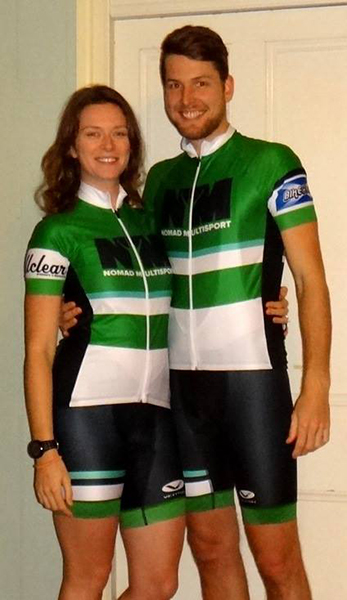
Folks, One of our NM regulars Anton knows a thing or two about nutrition. He has recently completed his doctorate, congratulations Anton, and thanks for your nutritional input. Below is Antons latest offering to Nomad Multisport. Available on the Website also. Anton has also put together some further reading on the subject, so if you would like to know more just let us know.
Anton Pluschke12,07,2015
With the 2015 Brisbane Marathon Festival just around the corner and Nomad Multisport coach Barry virtually getting his whole NM crew involved I think this is a good time to write something small which fits in nicely with effective training and recovery, but also extends to general health and wellbeing. As Barry pushes us all further physically and mentally he is also attentive to what his athletes ingest pre, during and post training. Constant reminders to stay well hydrated and to replenish depleted energy and electrolyte stores ensure that his athletes can back up solid training sessions throughout the week.
‘How can I reduce my salt intake?’ is a very common question at the moment and rightly so. The National Health and Medical Research Council have set an ‘adequate intake’ of 460–920 mg of sodium per day with a total maximum of 2300 mg per day. The adequate intake corresponds to 1.15–2.3 g of salt per day. An ‘average’ Australian consumes 10 g of salt per day, many times the maximum value of adequate intake. In terms of regulating blood pressure and avoiding hypertension (high blood pressure) this is a real cause for concern.
Research has shown that our preference for saltier foods immediately following a training session is significantly increased (Leshem et al. 1999). A potential reason for this preference for saltier foods following a training session is that exercise results in sodium loss (in perspiration) and/or nervous system arousal that activate the hormones, aldosterone and angiotensin II in humans. Changes of these hormones in humans are known to increase salt preference and reabsorption which in turn influences blood pressure. I won’t delve any deeper into the renin angiotensin aldosterone system (RAAS), but if you would like to read a little more about this system I have included a review (He and MacGregor 2003).
The purpose of this note was to bring to your attention to the amount of sodium/salt that we consume on a daily basis and that exercise has been shown to increase the desire for saltier foods. Our bodies are extremely effective at reabsorbing sodium to maintain extracellular volume and serum osmolality, and given how much sodium is incorporated in processed foods these days we should all really be thinking twice about how much we add on top of our next meal before even tasting it.
Bon appetit and good luck for the Brisbane Running Festival,
Cheers
Anton
He FJ and GA MacGregor 2003. Review: Salt, blood pressure and the renin-angiotensin system. Journal of Renin-Angiotensin-Aldosterone System 4(1): 11-16.
Leshem M, A Abutbul and R Eilon 1999. Exercise increases the preference for salt in humans. Appetite 32(2): 251-260.